
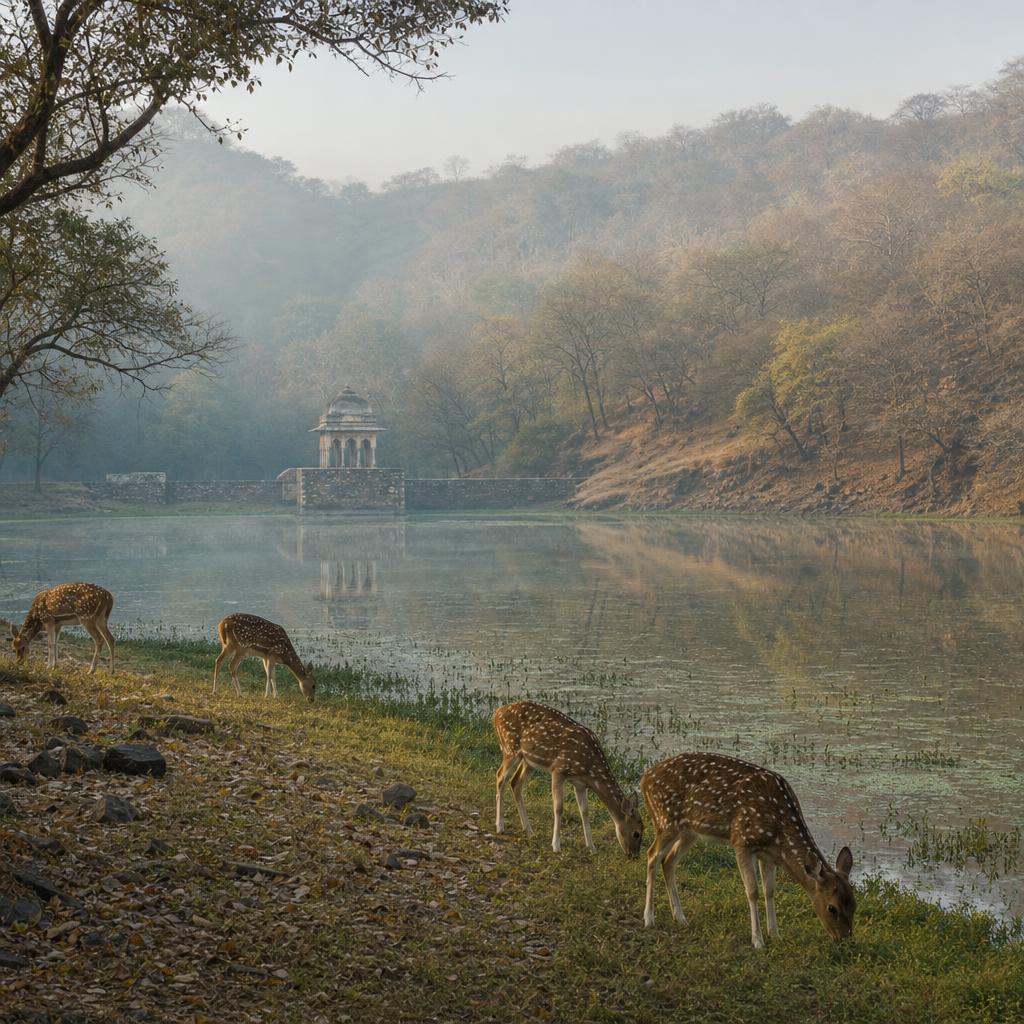
Understanding the Park
Ranthambore National Park is divided into 10 safari zones to manage tourist traffic and minimize human impact on the wildlife. Zones 1-6 are often considered the "core" zones due to the presence of large lakes, but tigers roam freely across all zones. Zone allocation is done randomly by the Forest Department computer system at the time of booking.
Known for the Singh Dwar (Lion Gate) entry, this zone features a mix of open grasslands and dense forest. Key spots include Tuti Ka Nala, Amreshwar Dang, and Sultanpur.
One of the most important zones, rich in water bodies like Jogi Mahal and Phuta Kot. It offers excellent sightings of leopards, deer, and apex predators.
Arguably the most famous and scenic zone. It encompasses the iconic Padam Talao, Jogi Mahal, and Rajbagh ruins. The terrain is a photographer's dream.
Another highly sought-after zone with diverse terrain. Features dense forests, small hills, and the Malik Talao lake.
Similar to Zone 4 in topography, this zone offers rugged hills and the beautiful Kachida Valley. Known for good tiger and leopard populations.
Shares boundaries with Zone 1. It has more open landscapes and large grasslands with scattered water bodies.
A slightly hillier zone with fewer water bodies compared to the core lakes, but it offers a wilder, less crowded experience.
Features rugged hills and dense canopy. The landscape here is dramatic and offers a different flavor of Ranthambore.
Located on the banks of the Chakal river, it is further from the main fort area. It offers a unique riverine ecosystem.
A newer zone with undulating terrain and beautiful valleys. Offers a quiet safari experience away from the heavy tourist traffic.
Request Specific Zones
While zone allocation is automated, advance booking increases your chances of getting preferred zones.